What do you actually need in your Alaska Cruise Packing list?
Most Alaska cruise packing advice starts with “pack layers” and stops there, leaving you wondering exactly how many layers, what weight, and whether you really need to buy a whole new wardrobe. Your Alaska cruise packing list does not have to mean dragging an overstuffed bag through the airport. The real skill is packing lighter than you expect while staying comfortable through weather that genuinely swings from drizzly and 40 degrees at breakfast to sunny and 65 to 70 degrees by afternoon, occasionally warmer at inland ports like Skagway, sometimes in the same port day.
This complete Alaska cruise packing list is organized by what actually matters: clothing layers, footwear, essential gear, sun protection, motion sickness prep, and the items most people either forget or waste space hauling along. We also cover what to confidently leave at home, which turns out to be just as useful as the “what to bring” list.
Alaska has been one of CruiseTipsTV’s most-covered destinations for good reason. The team has sailed Alaska multiple times, on different cruise lines, at different points in the season. The core lesson from all of that experience stays consistent: smart layering is the secret to packing light without sacrificing a single comfortable day on deck.
If you really want to take your packing game to the next level, check out our Cruise Calculator. It will help you plan your perfect cruise in 3 minutes. You’ll get a personalized packing list, ship-specific tips, and expert recommendations for your next cruise adventure.
What Should You Pack for an Alaska Cruise?
For an Alaska cruise from late April or May through September, pack lightweight waterproof layers rather than heavy winter gear. The essential alaska cruise packing list includes a hooded rain jacket, a packable puffer or fleece, breathable base layers, water-resistant walking shoes, compact binoculars, SPF 50 sunscreen, a swimsuit, and a small daypack for shore days. Alaska weather is more drizzly than freezing cold.

The most common mistake first-time Alaska cruisers make is packing for extreme cold instead of packing for rapid change. A typical day in Juneau can open drizzly and 50 degrees, clear up to sunny and the mid-60s by mid-morning, then turn breezy and cool again once you are back on the ship in the late afternoon. What handles all of that is a layering system with three distinct components you add and remove throughout the day, not a single heavy coat you wear all the time.
Base Layer: Keep It Light and Breathable
Your base layer is about everyday comfort: t-shirts, lightweight long-sleeve shirts, and comfortable travel pants or jeans. Cotton works fine for casual ship days and gentle port walks. For active excursions where you will move more, sweat more, or potentially get wet, synthetic or moisture-wicking fabrics are smarter because they dry faster and keep you warmer when damp. Pack enough to rotate through the sailing without doing laundry, but do not over-pack here. These are the lightest pieces in the bag.

Mid Layer: Your Warmth Layer
The mid-layer is what you reach for on a misty morning walk through Ketchikan, during a breezy approach to a glacier, or over your evening outfit in the dining room. A fleece jacket, a sweatshirt, or a lightweight hoodie all work. A warm knit scarf or wrap deserves a spot in this category too. It adds warmth over evening wear on chilly nights onboard without the bulk of a full jacket, and it doubles as a neck pillow on the flight to your embarkation port.
Evenings on Alaska cruises are notably more casual than on Caribbean sailings. The cooler weather and active port schedule shift the whole atmosphere. You will see slacks and sweaters at dinner more than gowns and blazers, even on formal nights. Pack a couple of versatile, nice-but-comfortable evening outfits rather than a full formal wardrobe.
Outer Layer: Two Pieces Beat One Heavy Coat
The outer layer is the part of your Alaska cruise packing list that matters most, and it is two pieces working together rather than a single heavy coat. First, a hooded waterproof rain jacket. Not a hoodie with a hood, but an actual water-repelling shell. Alaska weather is more frequently misty and drizzly than it is freezing, and having a jacket that sheds moisture changes a port day entirely. Styles from Columbia and North Face in the windbreaker and rain-shell category are the type of jacket experienced Alaska cruisers rely on repeatedly.
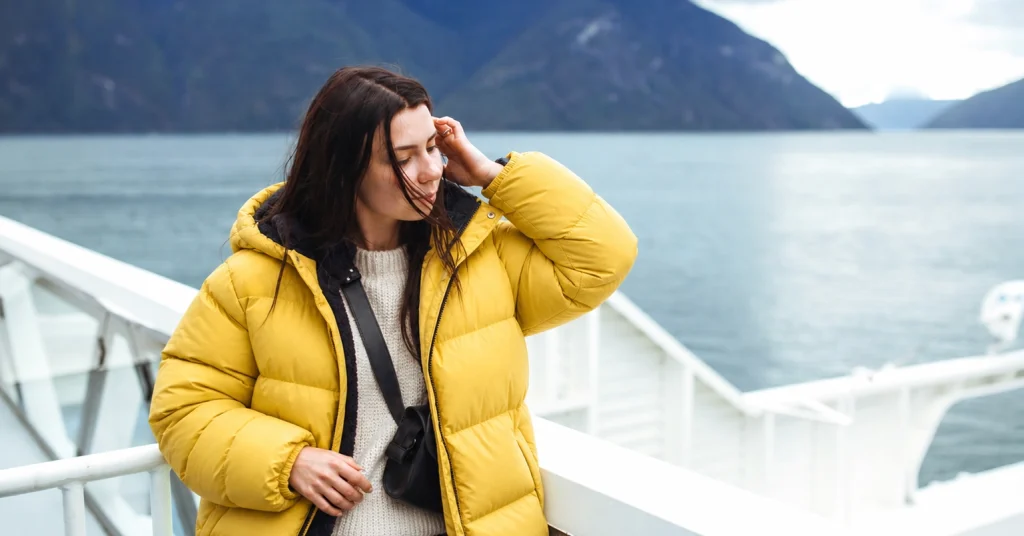
Second, a packable puffer or down jacket. Lightweight versions that compress into a stuff sack are ideal because you can stow them in your daypack when it warms up. Having a warm layer and a rain layer separately gives you three effective combinations: just warm layer, just rain layer, or both together for the coldest and wettest conditions. If you find one jacket that is genuinely both waterproof and warm, that works, but the lighter and more packable the better.
Footwear and Gear: What Actually Earns a Spot in Your Bag
Shoes are where Alaska packing gets specific and where the most avoidable suffering happens. The right choice is water-resistant walking shoes with reasonable traction. The rule that applies regardless of which shoes you choose: wear them in before your cruise. Even comfortable athletic shoes that fit perfectly can cause blisters if they have not been broken in over a few real walks. Showing up in Skagway in unworn shoes is a recipe for a miserable shore day.
Shoes That Actually Work in Alaska
Water-resistant sneakers, trail shoes, or duck boots all perform well for most port days. Mesh running shoes are a poor choice: they soak through immediately on wet docks, rain-slicked cobblestones, and any trail with morning dew. Brand-new stiff hiking boots are the other common mistake. You do not need serious hiking boots for Alaska cruise ports unless you have signed up for a technical glacier trek. A lightweight waterproof hiking shoe or trail runner that has been worn in covers everything most Alaska cruisers encounter.

Pack a pair of flip-flops or deck sandals for the ship. You will want them for hot tub sessions, the pool deck, and just getting around your cabin without wearing your walking shoes all day. This feels like a minor detail until day four when everyone else in the hot tub has deck shoes and you are wearing damp sneakers.
The Gear That Makes a Real Difference
Compact binoculars are one of the most important items on any Alaska cruise packing list, and one of the most frequently forgotten. Alaska has roughly 34,000 miles of coastline and the wildlife and natural beauty are genuinely spectacular: bears commonly spotted on shore excursions near rivers in July and August when the salmon are spawning, humpback whales surfacing off the bow, eagles perched on spruce trees in port, seals frolicking on icebergs near glaciers. Full-size binoculars work fine, but travel-size compact binoculars are lighter, pack easily, and are easier to handle on a moving deck. Glacier viewing day is the day you will most want them, for a close-up look at calving ice and any wildlife near the waterline.

A lightweight, water-resistant daypack rounds out the essentials. You need a place to put the layers you shed when the sun comes out, carry your water bottle and camera, and stow your rain jacket when you are ashore. Small packable backpacks compress to almost nothing in your suitcase and are practical on every single port day. Ziploc bags in a few sizes are also worth packing: they keep your phone dry in drizzle, protect a camera lens, and organize damp clothes at the end of an active excursion day.
For electronics, a USB charging hub for your cabin handles multiple devices at once (note that most major cruise lines now ban traditional power strips, so the hub format avoids that issue). A portable battery keeps your phone charged on long shore days. For budget planning on excursions: helicopter tours, flightseeing, and dog sledding in Alaska range from around $400 for flightseeing up to $900 or more for helicopter glacier-and-dog-sledding trips, so plan for those costs well in advance.

Our guide to Alaska cruise mistakes that can ruin your trip covers the most common planning errors, including not pre-booking excursions and underestimating what Alaska costs compared to Caribbean sailings. And for a port-by-port breakdown of what to expect in Juneau, Sitka, Skagway, Ketchikan, and the smaller gems like Haines and Wrangell, our ultimate quick guide to Alaska cruise ports is the place to start your shore-day planning.
Sun Protection and Glacier Days: The Items Cruisers Most Often Overlook
Alaska in summer has very long days with early sunrises and late sunsets, and the UV exposure from sun reflecting off snow, glaciers, and open water is significant. Most cruisers heading to Alaska assume sunscreen is a tropical-cruise item and get burned on deck during a glacier day. Pack SPF 50 sunscreen as a non-negotiable item on your Alaska cruise packing list. It is not optional.
For an easy-to-apply spray that travels well and works for both deck days and port excursions, Sun Bum SPF 50 is a great sunscreen for cruises: water-resistant, high SPF, and straightforward to reapply throughout the day. If you prefer a mineral formula, particularly for days when you will be in or near the water at a port stop, a reef compliant sunscreen like the Hawaii SPF 50 Mineral Sport Sunscreen provides strong protection without a white cast.
For a compact option that fits in a jacket pocket, the Neutrogena Beach Defense SPF 50 is a sunscreen stick for cruise travel that is easy to apply to face and hands quickly and without mess. Having more than one sunscreen format makes it easy to reapply throughout a long glacier viewing day without excuses.
Glacier days have a few other specific items worth pulling together the night before. Bring your warm hat and a pair of gloves, because the temperature drops noticeably as the ship enters a glacial area, often in the early morning hours. Camera-friendly touchscreen gloves are a smart choice specifically for glacier days: they let you photograph a calving glacier or a seal on an iceberg without fumbling your gloves off in the cold. A warm scarf earns its weight on glacier days more than any other moment of the sailing.

One item that surprises first-time Alaska cruisers is an eye mask for sleeping. Alaska summer evenings are long and bright, with early sunrises that come in through cabin curtains. If you need darkness to sleep, bring either an eye mask or a clothespin to clamp the curtains shut against the light gaps at the edges. It sounds minor until you have been awake since 4:15 a.m. in Glacier Bay.
Do You Need to Worry About Seasickness on an Alaska Cruise?
For most Alaska cruises, seasickness is mild compared to open-ocean itineraries. The Inside Passage route is protected by islands and coastal geography, creating calmer conditions for much of the sailing. Open-water crossings and September sailings can be rougher, though, and some people are sensitive regardless of sea state. If you have ever felt motion sickness while traveling, pack a remedy just in case.
Bonine is a solid choice for non-drowsy motion sickness relief: the chewable tablets provide up to 24 hours of coverage, they are easy to keep in a jacket pocket, and they travel without any issue. Dramamine Less Drowsy is also a great option for motion sickness on a cruise, with a long-acting formula that provides relief without heavy sedation so you are not missing port days asleep in your cabin. Both are worth having in your bag even if conditions end up being calm, because you won’t know what the open-water legs feel like until you are out there.

Beyond medication, the standard guidance for reducing motion sensitivity applies: choose a cabin in the middle of the ship on a lower deck where movement is reduced, stay hydrated, and avoid heavy meals before any known open-water segments. If you want to go deeper on prevention strategies, remedies, and what actually helps on rough days at sea, we have covered all of it in our guide to cruise seasickness tips. Getting this right means you are on deck for the wildlife and the glaciers, not lying down below wishing you had packed differently.
What You Can Leave at Home
Building the right Alaska cruise packing list means being just as deliberate about what stays home as what goes in the bag. Over-packing the wrong things is more common than under-packing.
A heavy winter coat is the most common over-pack for Alaska. Two lighter layers, a waterproof rain shell and a packable puffer or fleece, give you more flexibility, more warmth-to-weight efficiency, and are far easier to manage while walking through a port town or climbing in and out of a zodiac. A heavy coat takes up enormous suitcase real estate and is not needed for Alaska cruise conditions between May and September.

Brand-new stiff hiking boots are another item to leave at home or at least not bring as your only shoe. Break in every pair of shoes before your cruise, including comfortable athletic shoes that seem like they should not need breaking in. Alaska port days involve real walking on real terrain. Blisters on day two of a seven-day sailing are a completely avoidable problem.
Excessive formal wear can stay in your closet. Alaska itineraries have a notably casual atmosphere compared to other cruise routes. While most ships do include a formal or elegant night, the dining room will be full of travelers in nice sweaters and trousers rather than gowns and tuxedos. Two versatile evening outfits cover everything you need for an Alaska sailing.
And please do not leave your swimsuit behind. This comes up over and over from experienced Alaska cruisers for a reason. Hot tubs on Alaska cruises are genuinely one of the best experiences on the route. Soaking in warm water on the ship’s deck while the scenery moves past in every direction is as good as it sounds. Many first-timers talk themselves out of packing a swimsuit because they are thinking about cold temperatures. Do not be one of those people.
When your Alaska cruise packing list is dialed in around layers rather than bulk, the right shoes, a compact set of gear, and a few key extras like binoculars and sunscreen, you are set up to actually enjoy the trip rather than spending it hunting for things you wish you had packed. Alaska rewards people who are prepared to get outside for it. Pack smart, go light, and make sure you get out on deck on glacier day.
Get your alaska cruise packing list sorted well before your departure date, give your shoes a few real-world walks, and leave the heavy coat behind. Alaska has a way of becoming the kind of trip people talk about for years afterward. Until next time, we’ll see you on the high seas.
What is the most important thing to pack for an Alaska cruise?
Layers are the single most important element of any Alaska cruise packing list. Pack a waterproof rain jacket with a hood, a warm mid-layer like a fleece or packable puffer, and breathable base layers. Alaska weather can shift from drizzly and cool to sunny and warm within hours of the same port day.
Do you need a heavy winter coat for an Alaska cruise?
No. A heavy winter coat is one of the items most experienced Alaska cruisers leave at home. Two lighter layers, a waterproof rain jacket and a packable puffer or fleece, are more versatile, easier to manage, and just as warm for conditions you will encounter from May through September.
Should I pack a swimsuit for an Alaska cruise?
Yes, absolutely. Hot tubs on Alaska cruises are one of the best-kept secrets of the route. Many cruisers skip the swimsuit assuming Alaska will be too cold, but soaking in a heated tub while gliding past glaciers or after a long shore excursion is genuinely one of the highlights of the sailing.
Is sunscreen necessary on an Alaska cruise?
Yes. Alaska summer days are long, and UV reflection off snow, glaciers, and open water is intense. Many cruisers are caught off guard. Pack SPF 50 sunscreen and consider a reef-compliant mineral formula if you plan to be in or near the water during port excursions.
What do Alaska cruisers most often forget to pack?
Compact binoculars top the list. They make a dramatic difference for glacier viewing, wildlife spotting, and waterfall close-ups. Bug repellent for adventure excursions and an eye mask for Alaska’s long summer days are the other two most commonly overlooked items.
Cruise like a PRO!
Download our shore day bag checklist and more cruise packing and planning checklists & videos by joining the CruiseTipsTV Academy. We have a special discount code for our readers on this Intro to Cruising Master Class.
To redeem the $5.00 discount on our master class, enter code ALLABOARD here, and welcome to the Academy!
Need a Travel Advisor?
Contact our travel agency partner, Montebello Dream Vacations: Let Wendy know you were referred by CruiseTipsTV when you call. Wendy will match you with the best agent for your needs, and an agent will give you a call back! Phone number is on the website.